
Alligator Ron Bergeron assists in locating and removing a 16-foot female Python and nest with four dozen eggs
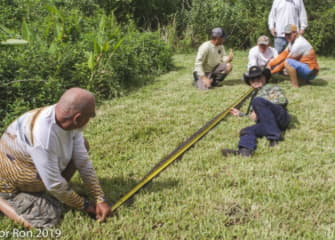
“Alligator” Ron Bergeron, an Everglades conservationist and South Florida Water Management District Governing Board member, helped capture one of the largest Burmese Pythons to date in the Florida Everglades and eliminated and even larger threat by removing a nest of approximately 40-50 eggs in various stages of hatching.
Bergeron was at his family’s camp on Saturday morning in the central Everglades shooting some educational videos on the environment when a call came in from two men—Brian Van Landingham and Frank Branca— who had spotted the Python on their nearby island camp. Bergeron jumped in his airboat and went to the scene about four miles south of Alligator Alley in Broward County to assist.
The female Python, measuring just over 16 feet and weighing approximately 165 pounds, was nesting under a home. The group captured and removed the invasive species which is doing irreparable harm to the fragile Everglades ecosystem.
“The Burmese Python poses a significant threat to the Florida Everglades by disrupting the natural food chain,” said Bergeron. “With good fortune, we were able to find a large female, and remove her and an entire nest of up to 50 baby snakes which would have continued killing off our precious habitat.” Bergeron said approximately one-third of the new hatchlings would have likely lived to become adults.
The Python was first discovered in the Everglades nearly two decades ago and has been responsible for taking down possum, deer, rabbits, bobcats, alligators and other indigenous wildlife. The Florida Wildlife Commission (FWC) and South Florida Water Management District (SFWMD) both have active eradication program in place, but Bergeron said Governor Ron DeSantis wants to see those efforts expanded.
“I want to thank the Governor for making the eradication of the Burmese Python a top priority,” said Bergeron. “He has asked both state agencies to work with our federal partners (Everglades National Park) to find ways to increase access to remote areas so we can engage more qualified personnel to remove this invasive snake.”

